
2024-2025 Year in Review
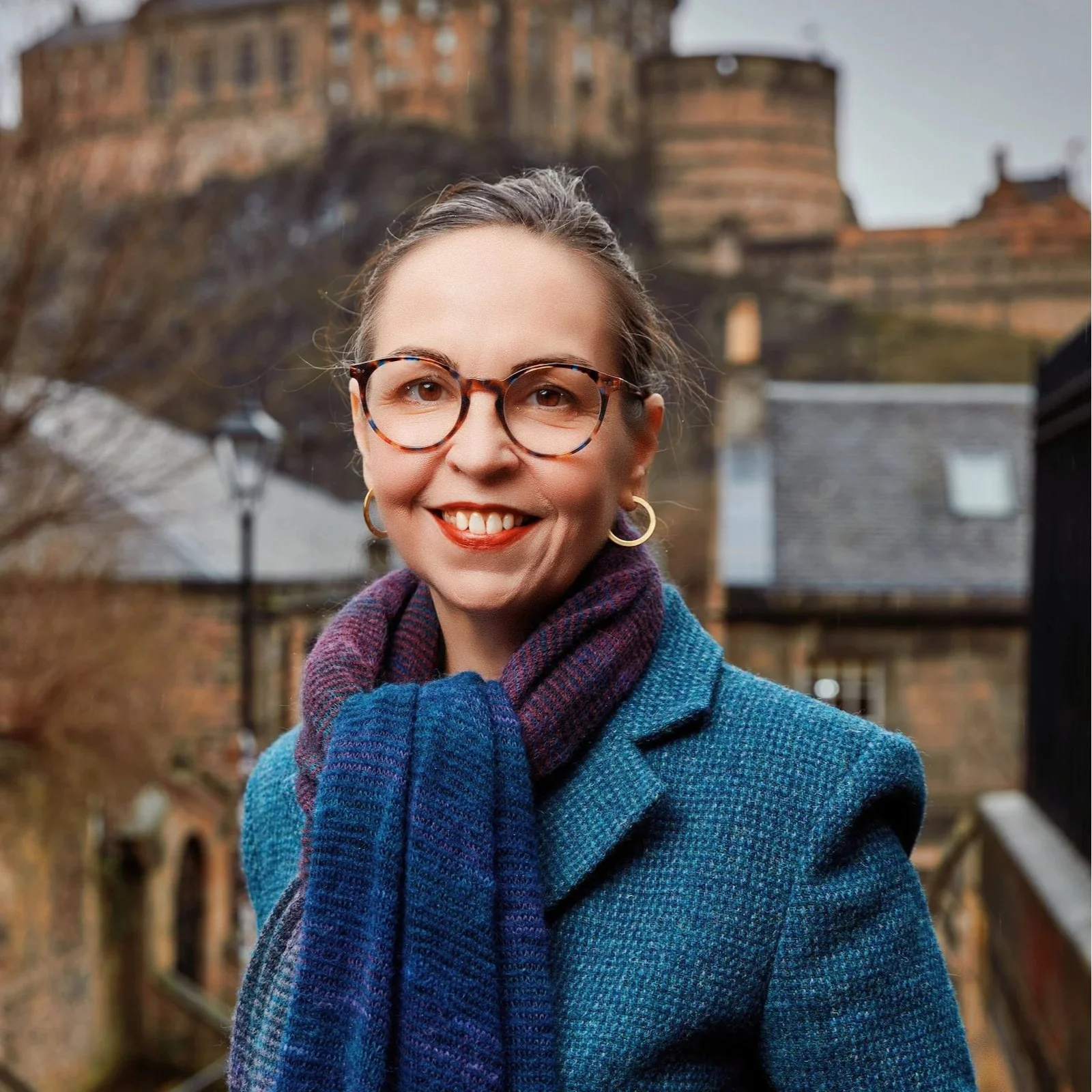
Overview from Professor Shannon Vallor, Director of the Centre for Technomoral Futures
In 2024, we marked 5 years since the launch of the Centre for Technomoral Futures! It’s been an incredible journey - from the early days with myself, one administrator and five PhD researchers building deep bonds while meeting remotely for months during lockdown, to a sudden acceleration of new cohorts, new staff, new disciplines, new affiliates, visiting scholars, a Master’s programme launch, and along the way, an explosion of groundbreaking research.
Our PhD cohort not only published peer-reviewed papers, gave conference talks, advised policymakers, and won research prizes all while building their dissertation research from the ground up; they formed spontaneous collaborations, wrote papers together, studied together, questioned each other, pushed each other into new areas of inquiry, learned new methods from each other, and most importantly, supported one another through all of the daunting challenges that a PhD brings. This remarkable community has only grown in richness through the recent addition of our affiliate and visiting scholar programmes.
The Centre is founded on the insight that technological and moral expertise must come together if our futures are to be worth wanting. We know that this is only possible when we begin breaking down the intellectual and institutional silos that still separate and isolate philosophers, legal scholars, computer scientists, engineers, social scientists, physical scientists, artists, designers, historians, and mathematicians in virtually every university. The first five years of the Centre have proven what can be achieved when we take the first steps toward weaving these split threads back into something like wisdom.
At the start of the year, the Centre moved into our new home in the recently opened Edinburgh Futures Institute building. Being in the building has provided an excellent opportunity to strengthen our community and build new collaborations. This has created an outstanding year of growth for our research community, along with the support of Emma Caldwell, who had a key focus on strengthening our community throughout her secondment as Centre manager.
Throughout the year, we have had a few staffing changes at the Centre, with Dr Zeerak Talat joining us as Chancellor’s Fellow in Responsible Machine Learning and AI in November and Dr John Zerilli leaving the University this spring to pursue a role at Kings College London.
In June, we highlighted the work of our early career researchers with our CTMF PhD Showcase. This was an excellent opportunity to present the collaborative, supportive and intellectually rich environment that has been cultivated at the Centre over the last five years.
Our community has benefited greatly from the contributions of our postdoctoral and senior research affiliates, who come from across the University to attend our events, reading groups and seminars while sharing their own work in progress. We have also hosted Visiting Fellows, who bring perspectives from beyond Edinburgh while having their own research expertise expanded by interactions and collaborations with the Centre.
This Spring, the Centre’s academics created and delivered a 4-day bespoke AI and data ethics learning programme for NatWest Group aimed at ‘equipping employees with essential AI knowledge and ethical frameworks for responsible decision-making.’ The programme was very well received, so much so that a second run of the course is in the planning. This August, we welcome Dr Emily Sullivan, Senior Lecturer in the Philosophy of Technology who will be working alongside me as Co-Director of the Centre for Technomoral Futures. On Tuesday 4 November, she will be chairing the next event in our ever-popular Technomoral Conversations series: How will AI change science?
In the coming year, thanks to an anonymous donor, we will launch our Distinguished Visiting Scholar Programme, where we welcome leading academics into our community for one week per semester. This Programme has been designed to bring leading academics into a short residence to share meaningful dialogue and facilitate discussions with our PhD, postdoctoral and affiliate researchers, spanning across multiple disciplines but with a shared focus on the ethical implications of AI and data-driven technologies. We are thrilled to be joined this year by Professor John P Sullins III, who will be giving our Flagship Lecture on 15 October, and Dr Abeba Birhane, who will be visiting in February.
Keep reading for a quick look at the 2024-2025 academic year at the CTMF, or click below to read the full report!
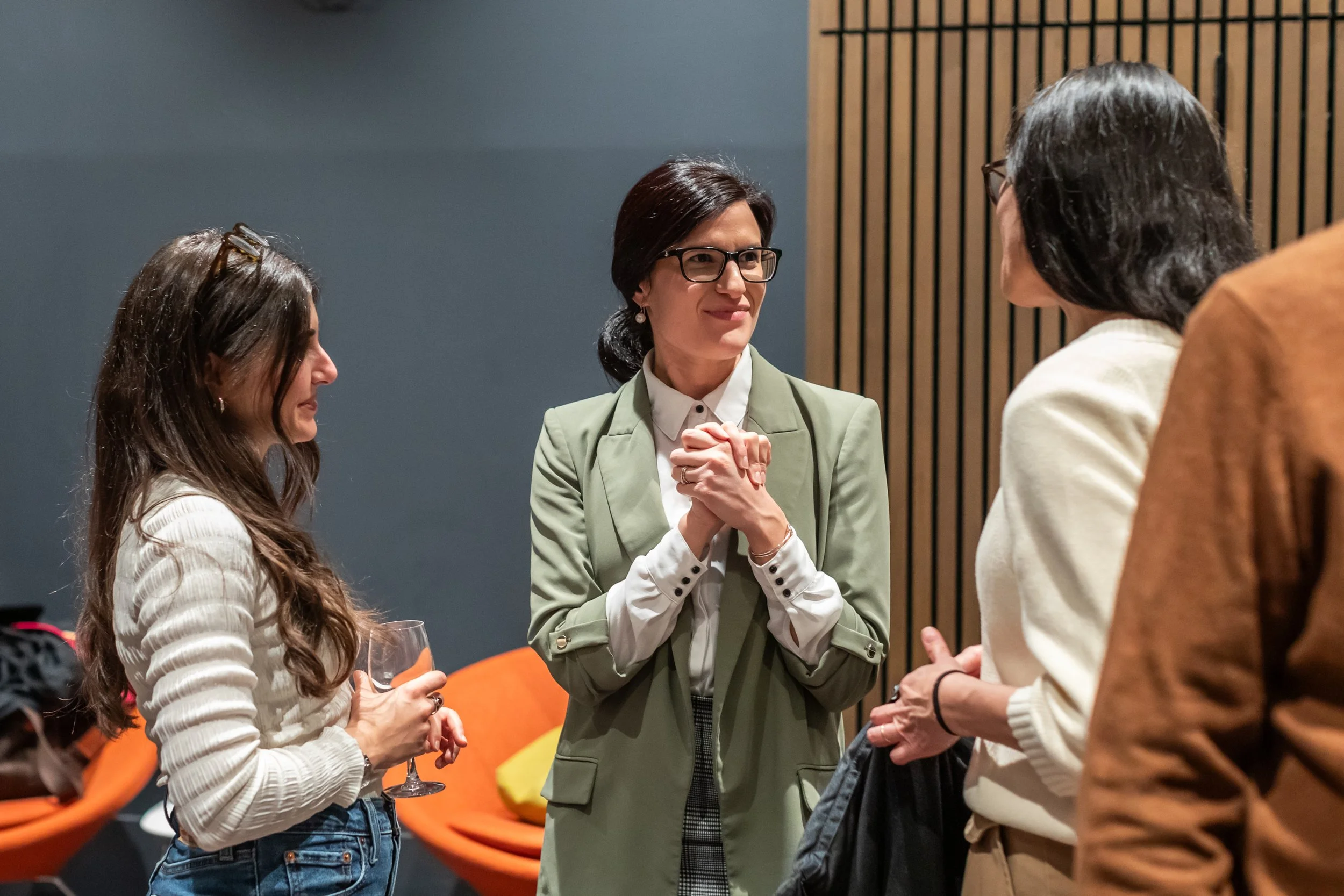
Members of our CTMF Research Community at a networking reception. Photo credit: Chris Scott
Research Highlights
In June 2025, the Centre marked its five-year anniversary with its first PhD Showcase, celebrating the diverse and impactful research of our community. The event featured a series of talks and poster presentations, offering insights into the work of our PhD Fellows. The Showcase highlighted the growth of our research community, from an initial cohort of four students in 2020 to a thriving network of 18 Fellows. The event was testament to the collaborative, supportive and intellectually rich environment that has been cultivated at the Centre over the last five years.
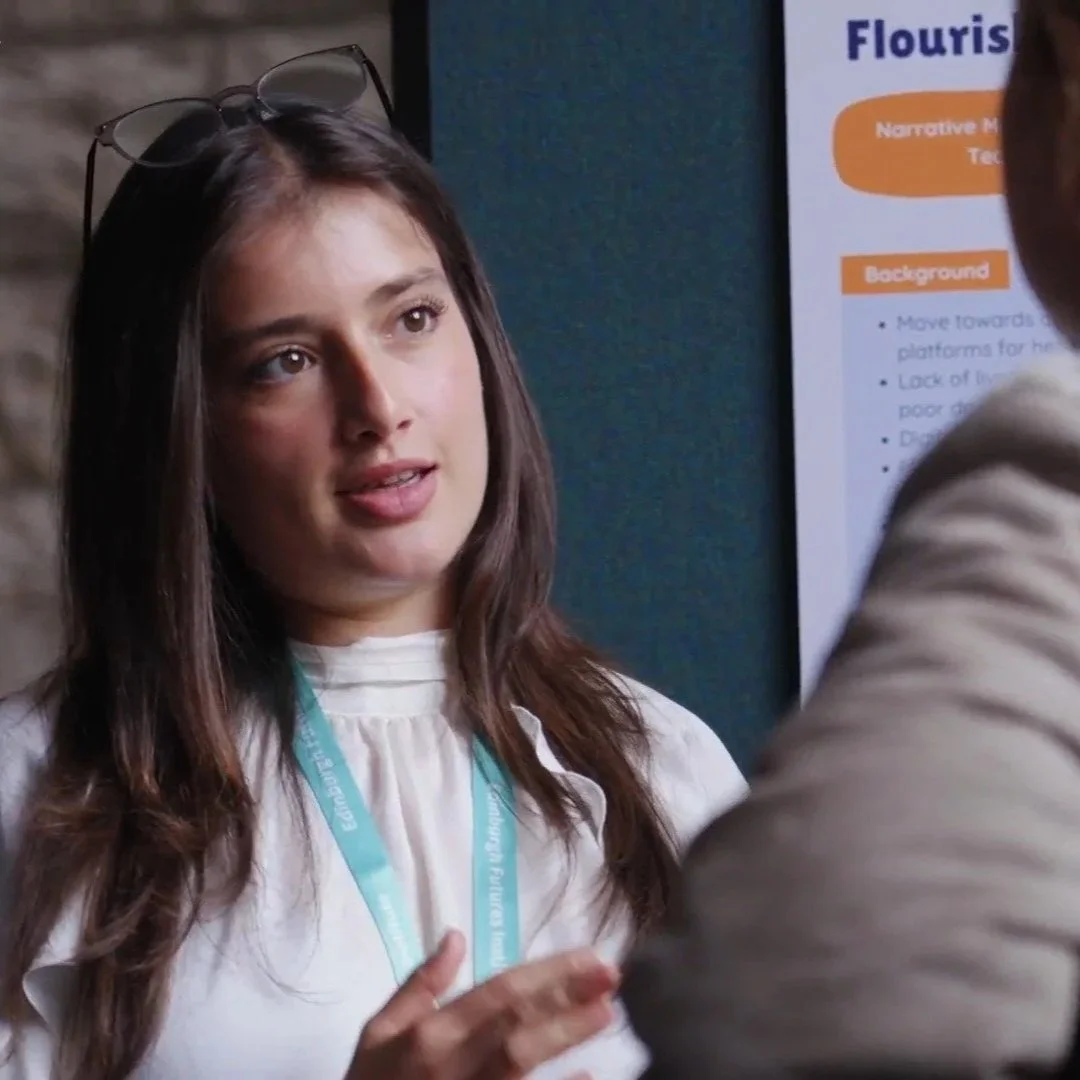
Elisa Cardamone discussing her research poster.
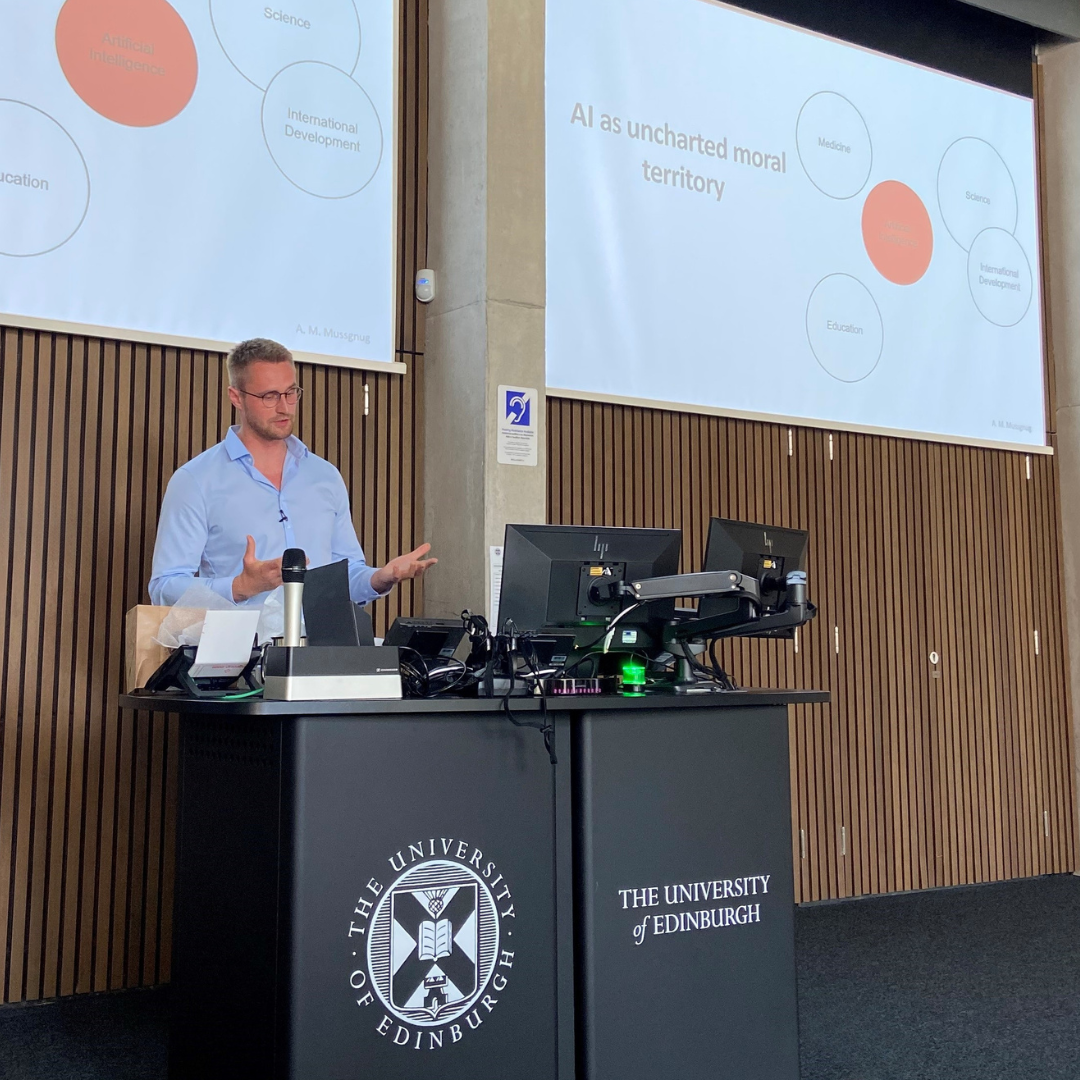
Alexander Martin Mussgnug presenting his research.
A few publications highlights from our Centre staff include:
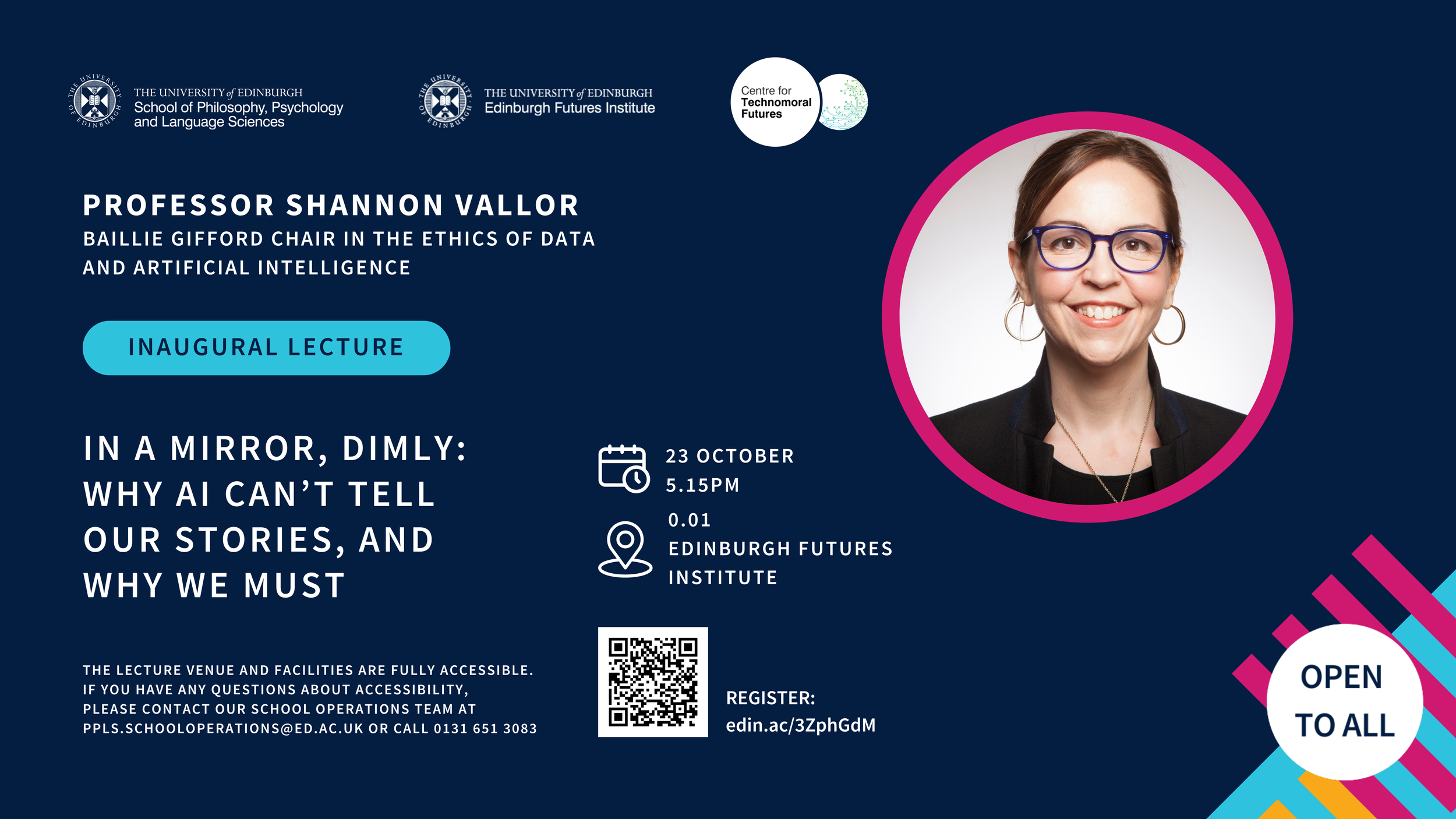
Professor Shannon Vallor gave her Inaugural Lecture, ‘In a Mirror, Dimly: Why AI Can’t Tell Our Stories, and Why We Must,’ at the University of Edinburgh’s Futures Institute. She discussed mirrors, space, time and stories, and explained how AI technologies function as mirrors, with the ability to reveal, magnify, distort, and confound. Her talk explored AI’s unwinding of the deep bonds between storytelling, human character, and purpose, and why our future depends on their renewal.
Dr Zeerak Talat joined the Centre in November 2024 as Chancellor’s Fellow in Responsible Machine Learning and AI, bringing new expertise to the team in the development of machine learning models and investigating and addressing the harms that arise from them.
Dr Atoosa Kasirzadeh was awarded a prestigious early career fellowship from the AI2050 program at Schmidt Sciences. Starting in fall 2024, this two-year fellowship will support her ground-breaking research on AI value alignment, a crucial area of study that explores how AI systems can be better aligned with human values and ethical principles.
Throughout the 2024-2025 academic year, Dr John Zerilli Dr John Zerilli played a key role in the teaching of our MSc in Data and AI Ethics, and contributed towards the work of the Centre. In March 2025, Dr Zerilli left the University of Edinburgh for a new position at King’s College London.
Dr Cristina Richie was elected to the Board of the Institute of Medical Ethics (IME) and the International Association of Bioethics (IAB). The mission of the IME focusses on improving education and debate in medical ethics, aiming to promote and support the impartial study and understanding of medical ethics and its integration into clinical practice. The IAB facilitates the exchange of ideas and resources amongst those working in bioethics and related fields.
Alongside Professor Shannon Vallor, Dr Fabio Tollon authored, ‘Mapping the Responsible AI Ecosystem: A BRAID Landscape Study.’ This report, the first in a two-part study of the Responsible AI landscape by the UKRI’s BRAID programme, provides a chronological and conceptual map of the Responsible AI (R-AI) ecosystem. They chart the role of various actors and communities in this ecosystem’s emergence, especially the vital contributions from the arts and humanities, and the historical development and contestation of different meanings of ‘responsibility’ in the context of AI
In her recent commentary for AI & Ethics, ‘The Harms of Terminology: Why We Should Reject So-Called ‘Frontier AI’’, Dr Gina Helfrich critiques the problematic framing of ‘frontier AI’ and challenges the narratives that fuel the divide between AI 'doomers' and 'boomers'.
In the 2024-2025 academic year, we were joined by four new PhD Fellows—Sasha Lee Smit, Harry Weir-McAndrew, Meenakshi Mani and Martin Disley—and four of our PhD Fellows submitted their theses:
Having passed his viva late last year, Dr Joe Noteboom’s thesis, ‘Life in the University of Data: Student perspectives on datafication,’ explores how students’ everyday experiences of datafication intersect with their diverse experiences of university, and asks how universities could better support students’ agency with respect to datafication through forms of participatory data governance.
Having defended his thesis, passing with minor corrections, Dr Jamie Webb has now taken up a prestigious postdoctoral role in ethics and infectious disease at the Ethox Centre, University of Oxford, a globally renowned institution for research in this field.
Dr Alexander Martin Mussgnug defended his PhD, ‘Ethics and Epistemology of AI in Science: Studies of Machine Learning Poverty Prediction’ last June, passing with no corrections! This autumn, he began working at Stanford and Apple University as an Interdisciplinary Ethics Fellow.
Having submitted his PhD, Dr Aditya Singh has now joined Open Future as Senior Policy Analyst. In his new role, Aditya will contribute to their Digital Communications work and lead on an initiative to develop a long-term strategy for digital and internet commons in Europe. He is excited about continuing his work on the digital commons and advocating for policies that sustain them.
Our Affiliate Programme has continued to thrive in the last year, growing to include 40 CTMF Affiliates, further strengthening a vibrant interdisciplinary community of scholars whose work aligns with the Centre’s overarching research agenda
Education Highlights
In October 2023, we celebrated a significant milestone as the first cohort of students graduated from our MSc in Data and AI Ethics. The success of this first year and a growing interest in the subject contributed to a notable increase in demand for the 2024-2025 academic year. Enrolment grew from 27 to 44 students, across both full- and part-time routes, studying online or on-campus.
MSc Scholarships:
In 2024, we welcomed two students from Chile supported by the Luksic Scholars Foundation. The scholarship aims to strengthen the capacity of Chilean professionals in the fields of data and artificial intelligence.
We are pleased to have partnered with the International Association of Privacy Professionals (IAPP) to introduce the Westin Scholar Award to our MSc programme. This prestigious award recognises outstanding academic achievement in the fields of privacy and AI governance. As the student with the highest overall mark, this year’s recipient was Maria Stielow.
Engagement Highlights
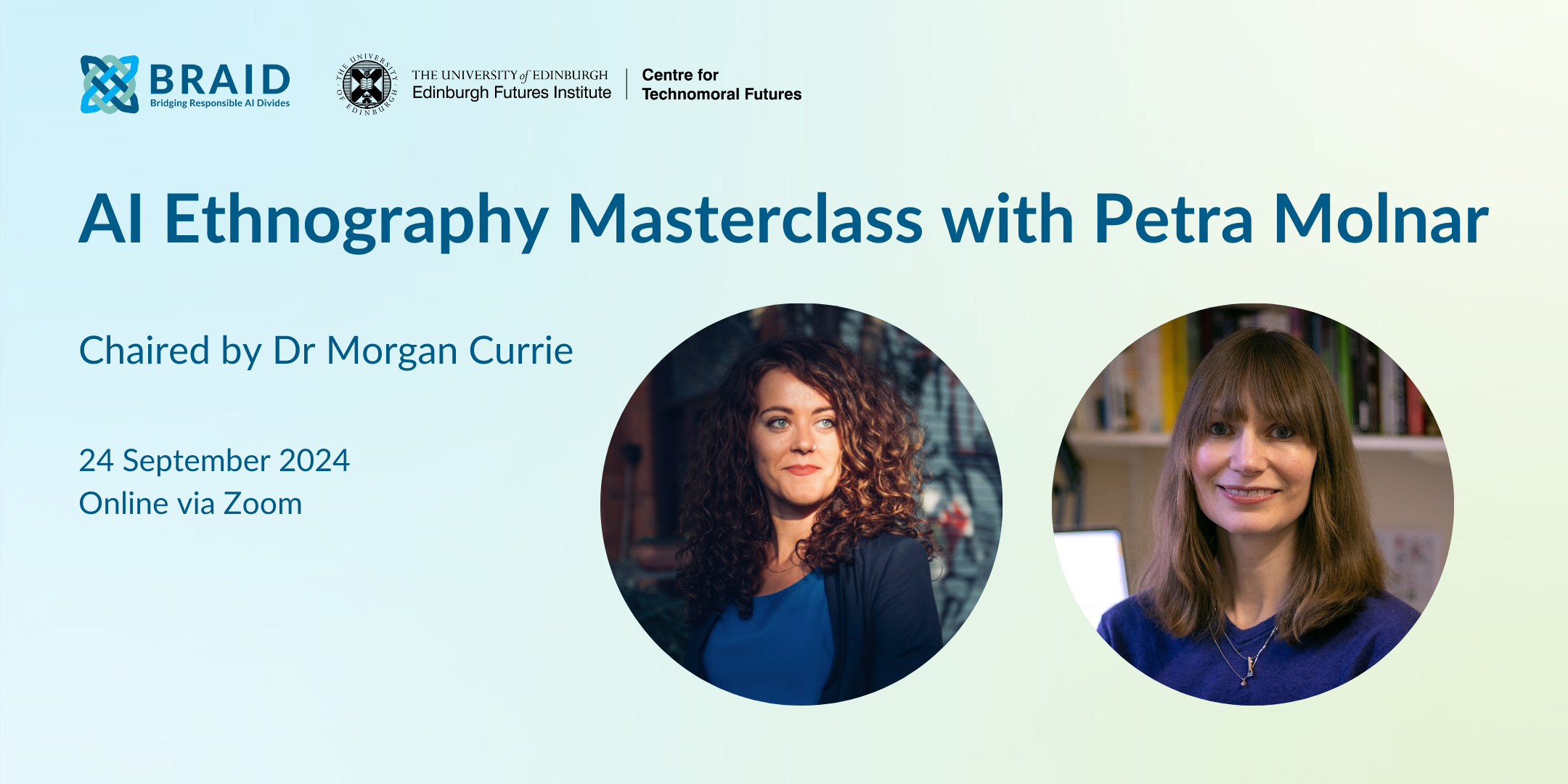
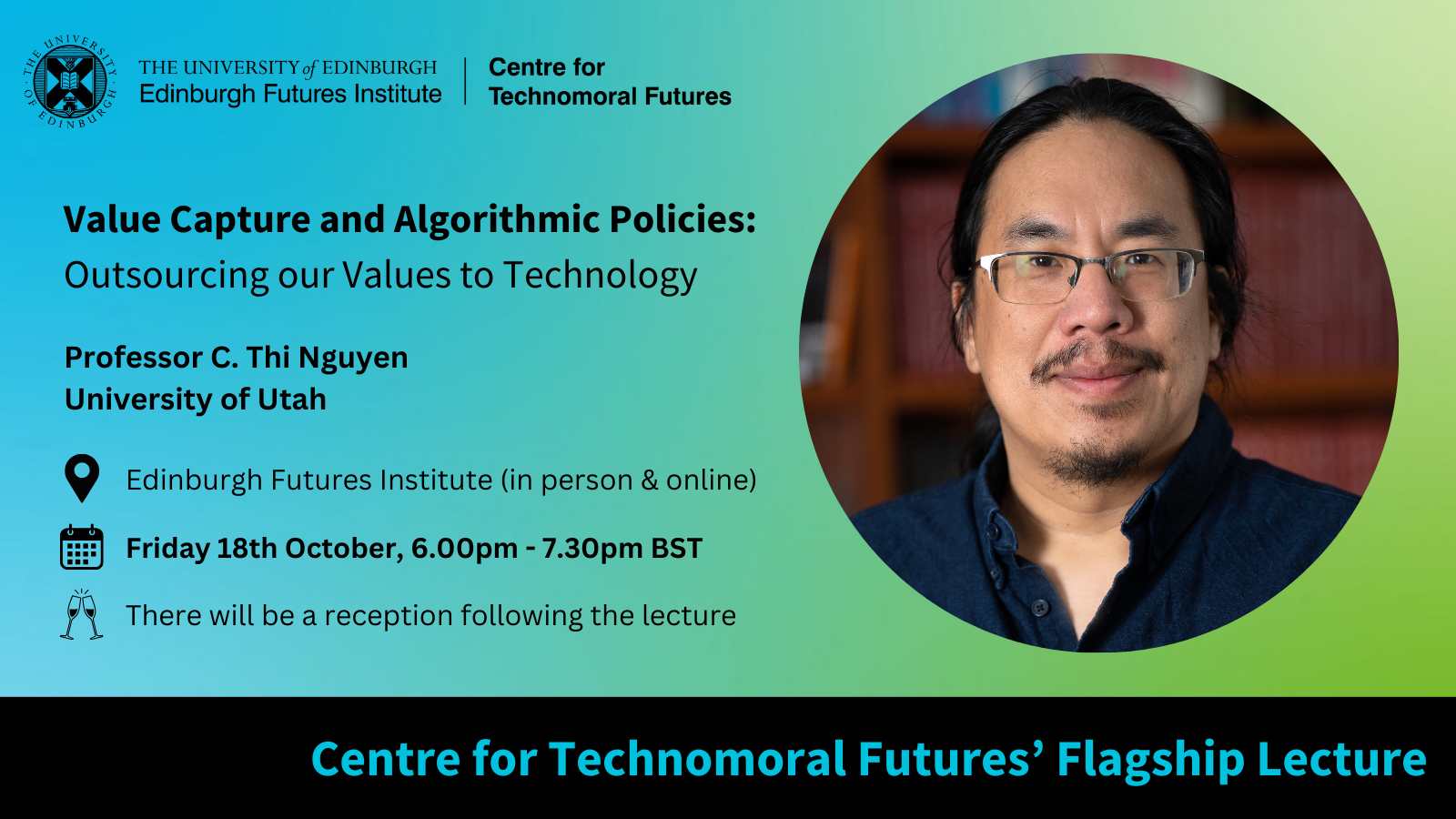
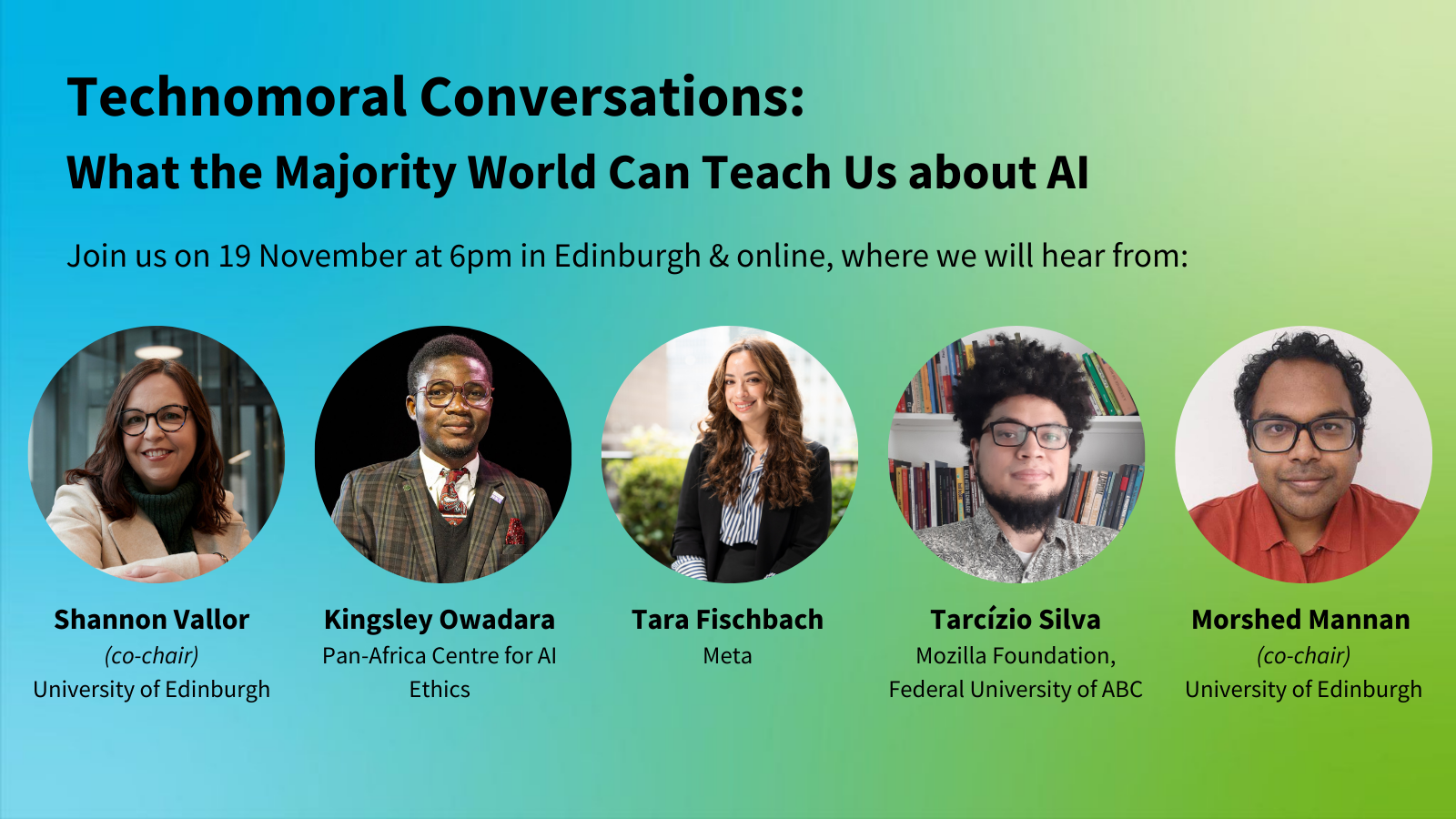
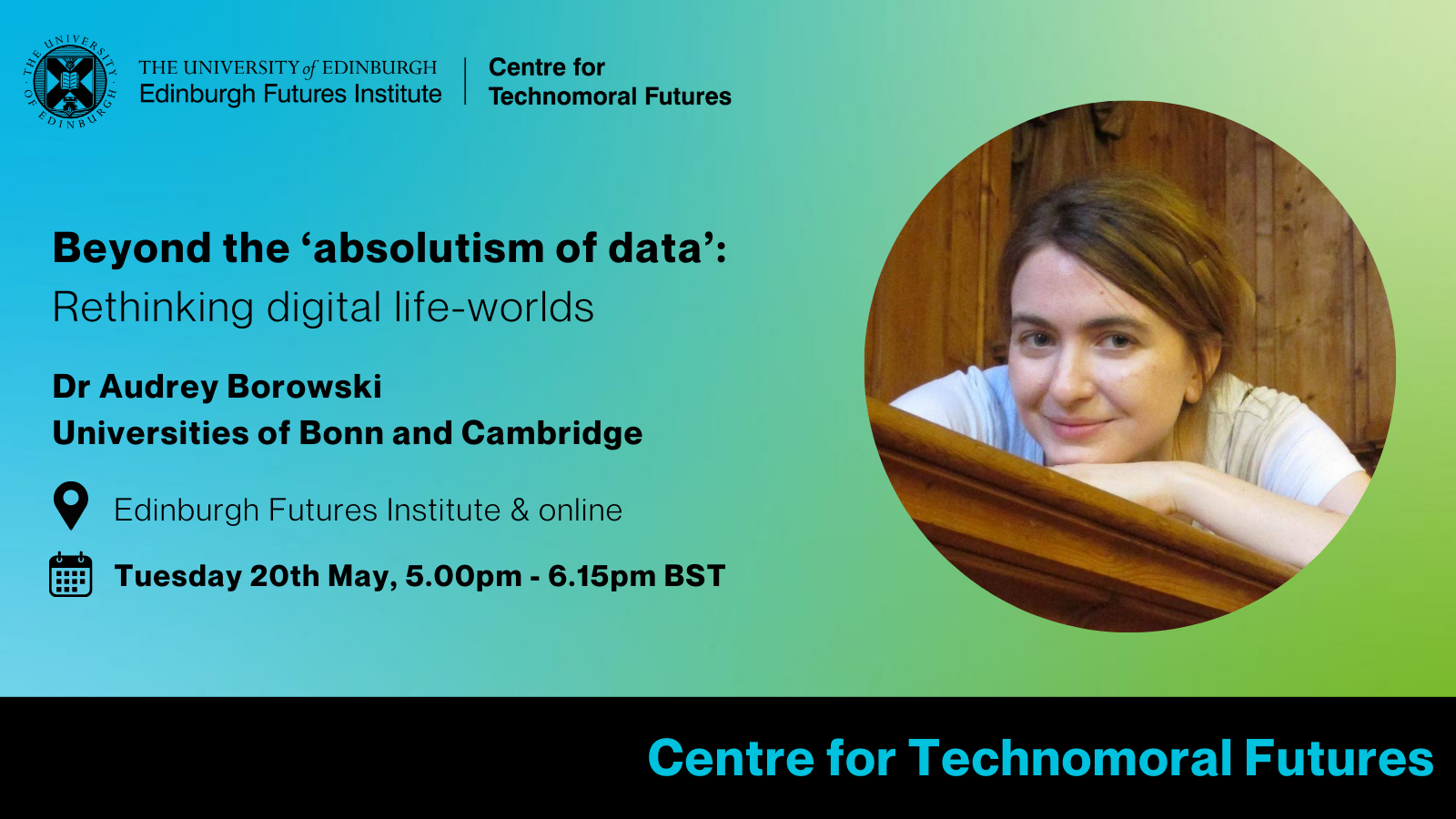
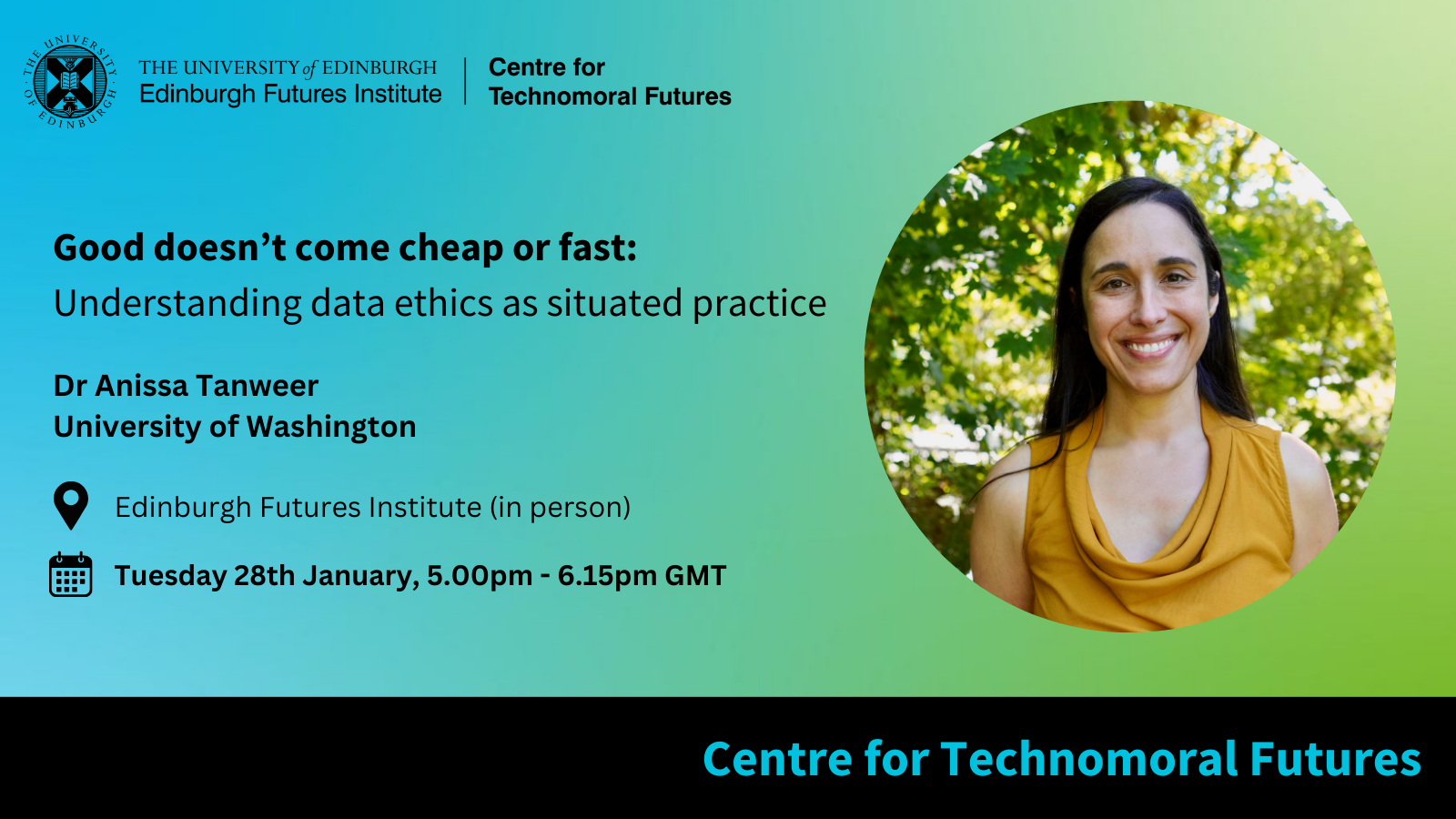
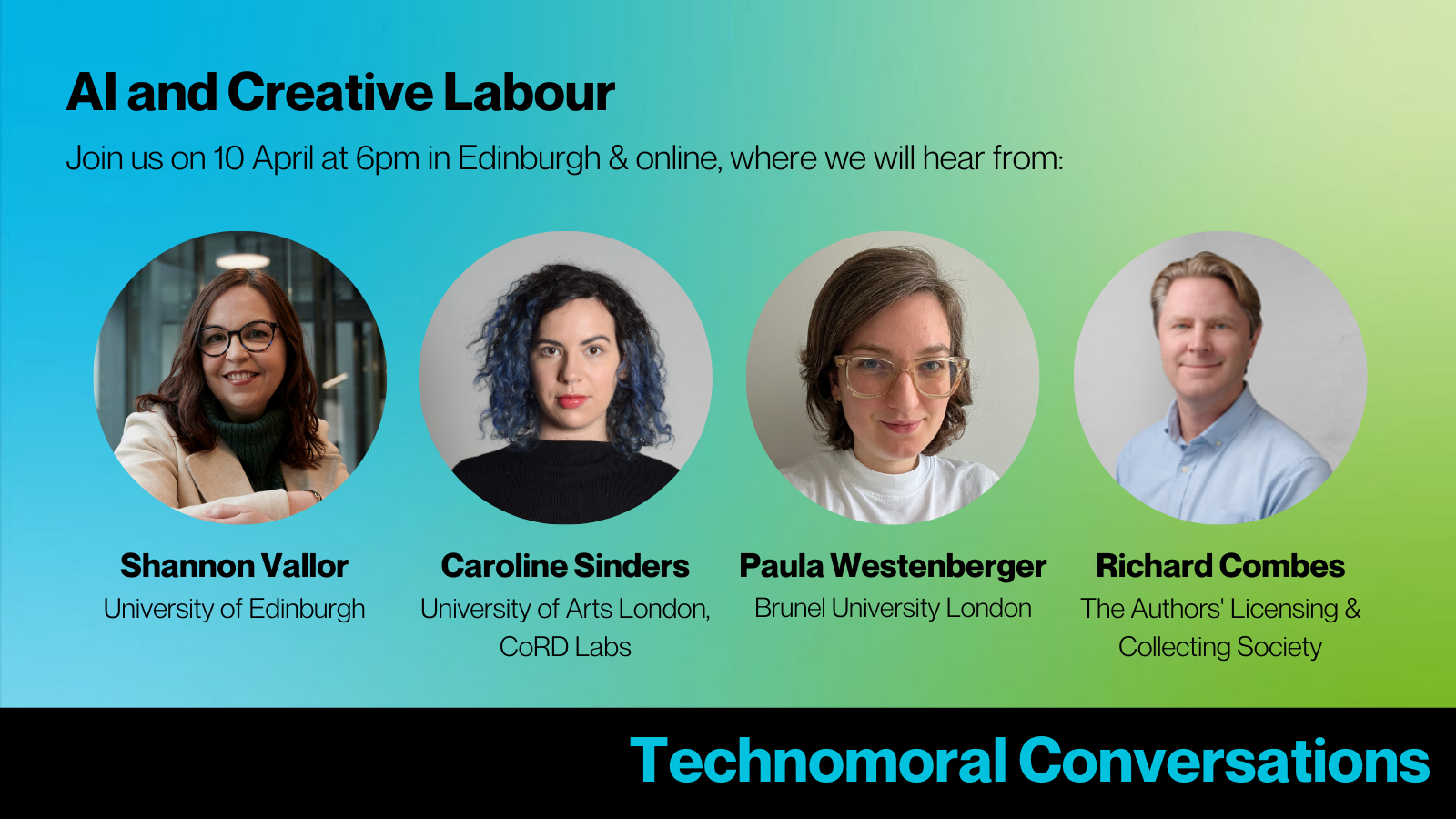
Throughout 2024-2025, we delivered and collaborated on numerous public events. A few key events were our:
Read about these events and our other public engagement activities in the full report, or click here to watch our event recordings!